Mission → Function → Service → Resource.
The hierarchy survives the research revision. The key change is at the resource level: a resource is anything whose condition limits the ability to realise a function — including models and algorithms.
Mission → Function → Service → Resource.
The hierarchy survives the research revision. The key change is at the resource level: a resource is anything whose condition limits the ability to realise a function — including models and algorithms.
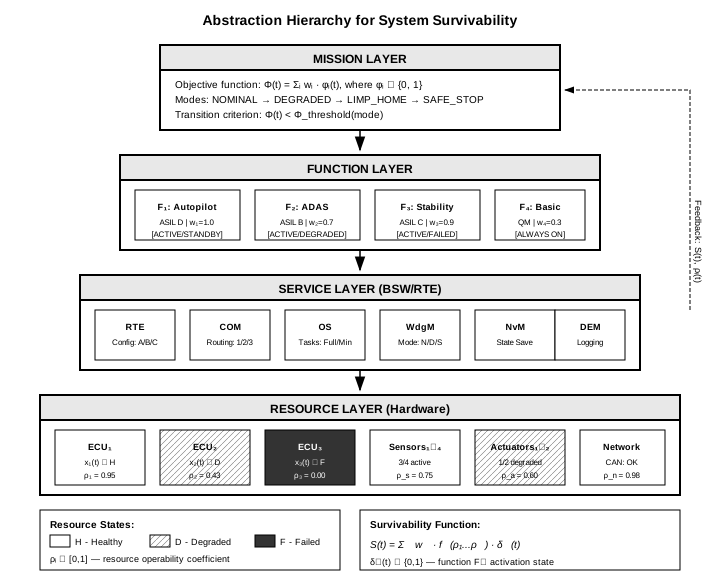
The hierarchy remains a structural backbone. The current model extends its resource layer and adds transition admissibility and timing outside the hierarchy itself.
The supervisor does not observe hardware alone.Open section
The supervisor does not observe hardware alone.
An estimator or learned model whose predictions no longer agree with observations is represented as a degraded epistemic resource. This allows physical faults and loss of model adequacy to enter the same capability calculation.